The AI Context Brief · Issue 02 · 18 Nov 2026
In a capacity crunch, owners beat renters.
Data center approvals on hold, a CEO gone, a lab going public. What actually changes on your desk this quarter.
Copies this issue as a ready-made prompt. Paste it into ChatGPT, Claude or Gemini and it will apply the ideas to your company.
This was the week the people who sell intelligence lost control of the supply.
Texas is keeping its freeze on new data center permits and large grid hookups while the state audits proposed projects, and its governor-elect has promised a wider moratorium once she takes office in January. In Georgia, counties and cities have their own moratoriums and the incoming governor has pledged a statewide pause, but nothing statewide is in force. The CEO of Nvidia resigned with no permanent successor named. Anthropic set a date to go public, and spent the same week shipping its own office suite.
Real estate people already know how to read a week like this. When supply gets tight, owners hold the power and renters pay what they're asked. The same goes for what a company knows. If it lives in one person's head, or inside one vendor's product, you're renting it. Here's what happened, and for each one, what I'd actually do about it if I were sitting in your seat.
The big stories
The week in five stories
10 to 13 Nov, plus a data center story that has been building since August. What happened, and what it means for you.
- 01Aug to Nov
Data center approvals are on hold in Texas, and that rewards whoever already has power and permits
What happened Texas has had a freeze in place since late summer. In August, Governor Abbott ordered the grid operator to audit every proposed data center seeking a connection, and the grid operator has paused energizing new large data centers until that audit is done. In September he told the state's environmental regulator to issue no data center permits until then. The grid operator is aiming to file its reports by 10 Dec. Then on 3 Nov, Texas elected Gina Hinojosa, who has pledged a broader moratorium on new data center approvals until the legislature passes new rules. She takes office on 19 Jan, and she has said a moratorium would apply to new permit applications, not projects already in the ground. Texas holds more than 25% of planned US data center capacity through 2030. Jefferies puts about 13 gigawatts of announced Texas projects at immediate risk. One analyst summed up who keeps building: "projects with power, permits and steel keep going." Georgia is a step behind. A long list of counties and cities, Cobb among them, have local moratoriums, and governor-elect Keisha Lance Bottoms has pledged an executive order for a statewide pause. Nothing statewide has been enacted.
What it means for you This one is a real estate story before it's a tech story. Powered land, permits and utility capacity just became the scarce asset, and the scarcity is political. If anything in your pipeline or portfolio is underwritten on a data center buyer, a data center tenant or demand spilling over from one, pull it out this week and re-run it with that buyer gone. Then do the opposite check: a site that already has power and permits is worth more today than it was last month. Know which kind you own.
Source: King & Spalding, 6 Nov · Texas Tribune, 21 Sep · Texas Tribune, 4 Nov · ERCOT · Yahoo Finance, Texas · Yahoo Finance, 13 GW at risk (Jefferies) · Yahoo Finance, "power, permits and steel" · Georgia Recorder · Yahoo News, Georgia pause
- 0212 Nov
Jensen Huang resigned, and the industry found out how much ran through one person
What happened Nvidia's board accepted Huang's resignation as CEO and director, named CFO Colette Kress interim CEO and appointed Harvey Jones as its first-ever board chair. It followed reports of an affair with an alleged Chinese spy. The shares opened about 13% lower and closed down 4.3%. TechCrunch reported there was no heir apparent and no succession plan. The board's first public job was to say that operations, customer commitments and the product roadmap would "continue without interruption." Nvidia reports results on Tuesday 17 Nov, the first look at the company without him.
What it means for you Every firm has a Jensen. Usually it's the person who holds the lender relationships, or the one who decides which deals get capital first. If you run a fund, your LPs already underwrite key-person risk in the fund documents. Do the same inside the firm. Ask yourself whether you could put out that board's sentence about your own company and mean it. The question isn't "who replaces them?" It's "which decisions would stall for a month if they were gone tomorrow?" Write those down. That list is your succession plan.
Source: Nvidia 8-K (SEC) · Nvidia newsroom, 12 Nov · TechCrunch, 12 Nov · NBC News
- 0310 Nov
Self-improvement showed up in an IPO filing
What happened Anthropic's amended IPO filing says the value of its own internal Claude usage, priced at what customers pay, grew more than 250-fold between January and September, and in April passed its monthly personnel costs excluding stock compensation. It also says Claude wrote more than 90% of the code added to Anthropic's codebase in September. On its roadshow, Anthropic said one of its own models got Claude running on AMD chips in about three days with basically no human help, work that used to take dozens of engineers months.
What it means for you Two things. First, the models are becoming a utility. If a model can port itself to a new chip family in three days, the chip and the model are both swappable supply. What you can't swap is what your firm knows. Second, it's a governance problem, and it's yours sooner than you think. Your investment committee meets on a rhythm built for people. If software can take a deal from first look to a full underwriting package between two IC meetings, you need to decide now what it's allowed to finish on its own and what still waits for a room. Draw that line on one page. Decide it on purpose, before a vendor's default decides it for you.
Source: Anthropic S-1/A (SEC) · Forbes · Anthropic roadshow video
- 0410 and 12 Nov
Anthropic set its IPO: priced 18 Nov, trading 19 Nov
What happened Anthropic launched its roadshow on 10 Nov: 825 million shares at $70 to $78, listing on Nasdaq as ANT. Yahoo Finance reports pricing on Wednesday 18 Nov and trading on Thursday 19 Nov, at a valuation of $1.3 to $1.45 trillion, down from talk of $2 trillion. The filing shows $33.2 billion of revenue in the first nine months of 2026 and $895.4 billion of committed spending, mostly on compute and infrastructure.
What it means for you Read this listing as a real estate signal. It's a vote on the whole build-out, and the build-out is what's been driving demand for powered land, industrial sites and the power behind them. Put 18 Nov in the calendar. A strong book says capital is still chasing that demand. A cut price or a delay says the people underwriting your data center comps are about to get more careful. Either way, you'll know more on Wednesday night than any forecast can tell you today.
Source: Anthropic, 10 Nov · Yahoo Finance, 12 Nov
- 0510 Nov
Anthropic shipped an office suite in the middle of its roadshow, and the most important line was about definitions
What happened Anthropic launched Claude Meetings in beta, which joins video calls and starts on tasks while people are still talking, plus Claude Whiteboards and Claude Sheets in beta. Claude Data, its dashboard product, became generally available. The Verge's headline: "Anthropic has its own AI-powered office suite now." The line I'd underline: Claude Data lets a data team certify the definitions Claude uses, "so everyone works from the same numbers." One detail for anyone on an Enterprise plan: Anthropic says Claude Data "turns on by default on November 20, 2026," and it needs a data connector, such as a warehouse or CRM.
What it means for you Two things, one urgent. If your firm runs Claude on an Enterprise plan, ask whoever manages it before Friday what Claude Data will be connected to when it switches on. That's a five-minute question and it's better asked before the date than after. The bigger thing is who owns the definitions. A frontier lab is now selling a single source of truth as a feature, which tells you the model alone isn't enough. It needs agreed definitions of your business. Meeting notes, deal trackers and dashboards are where a firm's working memory piles up. Before your team gets used to living there, decide who certifies your numbers, find out what comes back out and in what format, and make sure those definitions live in something you own. Otherwise every switch starts from zero.
Source: TechCrunch, 10 Nov · The Verge, 10 Nov · Claude: Whiteboards, Sheets and Data · Reworked, 10 Nov

The quieter releases
The quieter releases that matter more to operators
10 to 12 Nov. Two releases from Google that show models being priced and packaged like any other utility.
Google: Gemini 4 Carbon on general sale, Hydrogen for everyone, and a price that doubles on a date
10 and 12 NovCarbon and Argon cost $2 per million input tokens through 30 Nov and $4 from 1 Dec. Hydrogen, the new everyday model, scores 51 on the Artificial Analysis index against Argon's 50. What it means: If anyone on your team built something on Carbon or Argon this month, their input cost doubles on 1 Dec. Find out before the invoice does. And test Hydrogen on the same work. On that index it scored a point higher than Argon, so the bigger model isn't automatically the right one for routine jobs.
Source: Google, Carbon · Google, Hydrogen · Google AI Studio pricing
Google: Gemini Decisions API
11 NovA model built only to make decisions: yes/no, choose one, or score against a rubric, at 10 cents per million input tokens with free output. What it means: A yes/no call now costs close to nothing. The rubric is the expensive part, and nobody sells it. Try this with your partners: each of you writes, separately, the three things that kill a deal at first look. Compare the lists. If they don't match, no model can screen for you yet, and that disagreement is the more useful thing to find.
Source: Google, 11 Nov
The big idea
Record it while it happens
The best operating lesson I know for this comes from a company that makes Tasers.
Axon built its second business on police body cameras and the cloud service that stores and shares that footage as evidence. The whole point is a recorded account instead of a retold one. And Axon doesn't run that cloud itself. Back in 2015 it announced it was moving the service from Amazon's cloud to Microsoft's. (Network World, Microsoft)
Hold both of those at once. Own the record. Rent the servers.

Most investment firms have that backwards. When someone asks why you passed on a deal two years ago, you get a retelling. Retellings drift, the person who made the call may have left, and nobody can check the story against what was known at the time.
This is how I think about context, and it holds whatever tools you use. Data is the rent roll, the loan balance, the signed lease. Context is the record of why: which deals you passed on and the reason, who made the call, what they assumed, and whether they turned out to be right. It only exists if it's captured the day it happens. Write it up a quarter later and you get the polished version, not the true one.
Here's the body camera for a real asset firm, and it costs nothing. After every IC decision, yes or no, one paragraph, the same day: what we decided, why, and what would prove us wrong. Keep them all in one place. In a year you'll have something no vendor can sell you: a record of how your firm actually judges risk. That's the asset you point super intelligence at later.
From the build
The list I'd start with
Last issue I said I'd walk through how I built a single source of truth at Fort, a private real estate investment firm. I spent 12 years there, 2014 to 2025. Rather than tour the whole system, here's the piece I'd copy first if I were starting at any firm tomorrow.
In 2018 I started designing the operating system Fort would run on, around one rule: a single source of truth for all company data. Then I led the team that built it. The most useful thing in it wasn't the clever part. It was the list of deals we said no to.
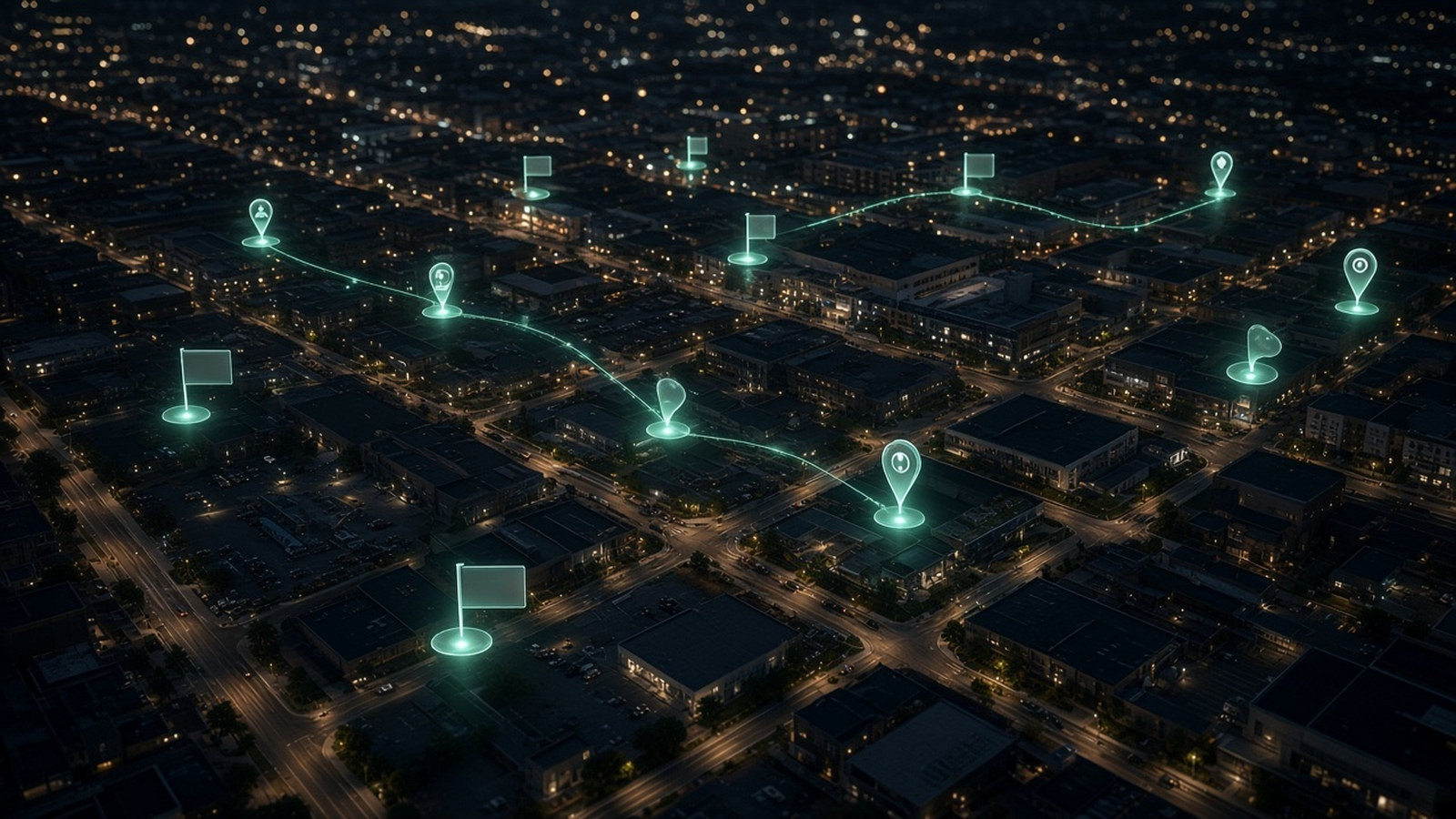
- The sourcing map remembered our no's. It showed the active portfolio, every deal in progress by stage, every deal that matched our criteria and hadn't been looked at yet, and every deal we had already vetted and declined. Nobody screened the same site twice, and the reason for each no stayed with the firm when people moved on.
- That only worked because every deal became a record the moment it was identified. Everything about the transaction attached to it: the property, the people, the documents, the decisions. A no was a decision like any other, so it got recorded like any other.
- And because work had an owner until it was done. Every piece of work had a defined task, an owner and a due date, and it stayed open until it was finished, so a half-screened deal didn't quietly disappear.
When the models arrived, that foundation is what let the firm move quickly. What I built on top of it worked from Fort's own records, not from the open internet. That work is where Fostr AI came from.
If you take one thing from this section: start a list of your no's this month. Address, date, who passed, and the one-line reason. It's the cheapest place to begin, and it's the list your competitors can't buy.
This week's short list
Five things to do now
Your ticks stay in this browser only.
Which decision in this firm only happens when one particular person is in the room?
If you can answer it in under ten seconds, you've found your Jensen. Reply and tell me what your team said. I read every reply.
Jason
Use this issue with your own AI
Copy as context
One click copies the full issue, its sources and a short set of instructions. Paste it into the AI you already use. It will ask you up to five questions about your firm, then give you a gap assessment against this week's short list and a 30-day plan.